The Gates of Scotland
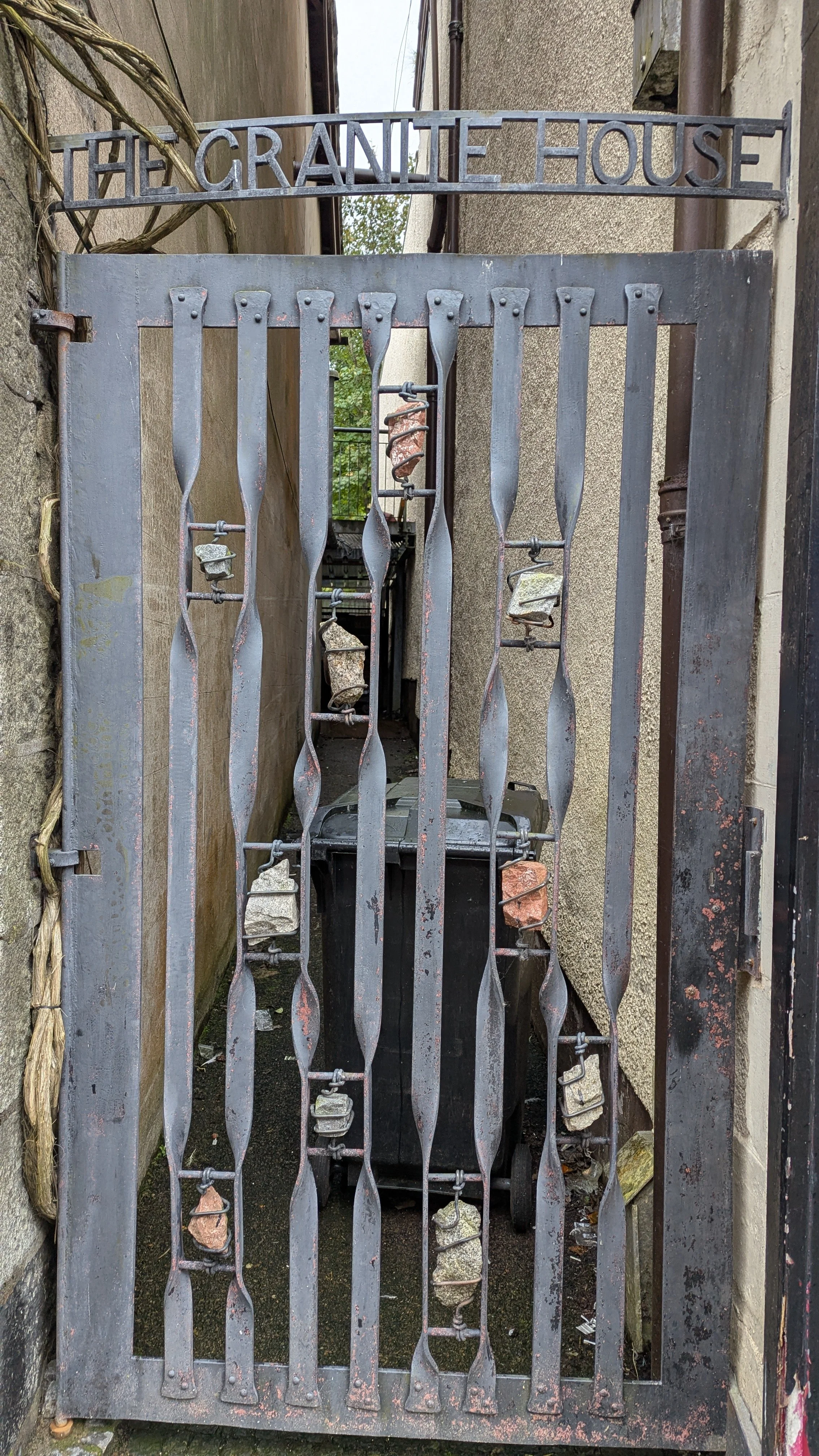
Every night in Portree, we walked past this gate on our way into town for dinner.
While wandering through Scotland’s cities, towns, and hidden passages, I found myself just as captivated by the gates as I had been by the doors. A door announces an arrival. A gate makes you wait for one.
Castle Gates vs. Alley Gates
Castle gates always had to pull double duty. On one level, they were just doing their job, keeping the wrong people out. But the way they did that job also happened to say a lot about who was in charge. Thick stone walls, narrow openings, and heavy timber doors studded with iron all speak volumes, communicating authority while protecting what’s on the other side.
Gates weren't always about keeping people out, though. You'd pass through this heavy, imposing gate and suddenly the castle would open up in front of you. Whoever designed that entrance wanted you to feel small walking through it, then wanted the space beyond to feel like a payoff.
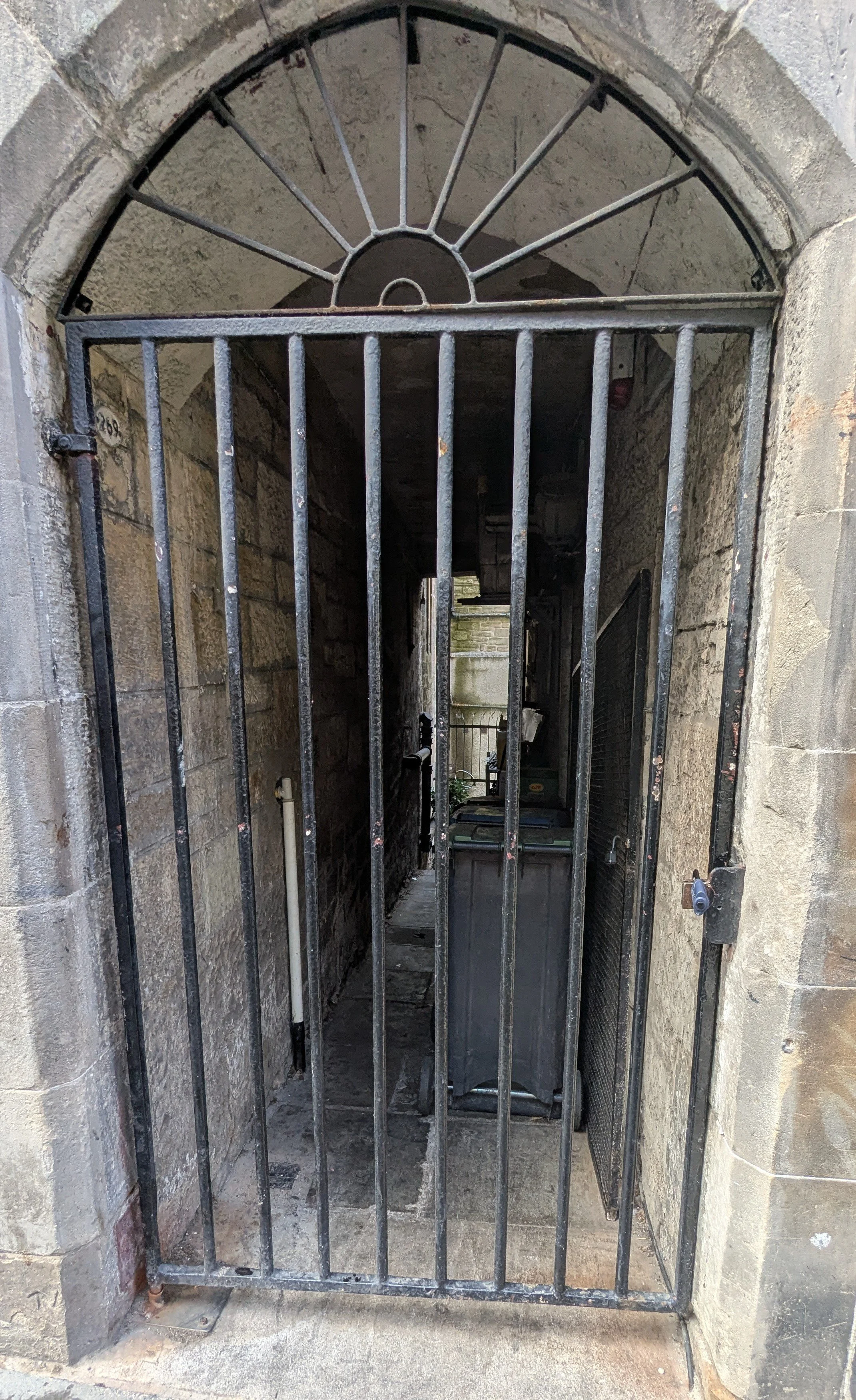
Just off the Royal Mile on Canongate Street, this gate leads to a private alley.
Then there's the alley gate. I found this one tucked into a narrow stone passage, guarding an alley that felt like it hadn't changed in centuries. No towers, no big statement, nothing fortress-like about it at all. Just some simple vertical bars and a small fanlight up top, matching the buildings around it instead of trying to stand out.
Standing there, looking through it, the passage kept pulling my eye further into the city. Instead of blocking the view, it framed it. A castle gate makes a statement. This one just made me curious.
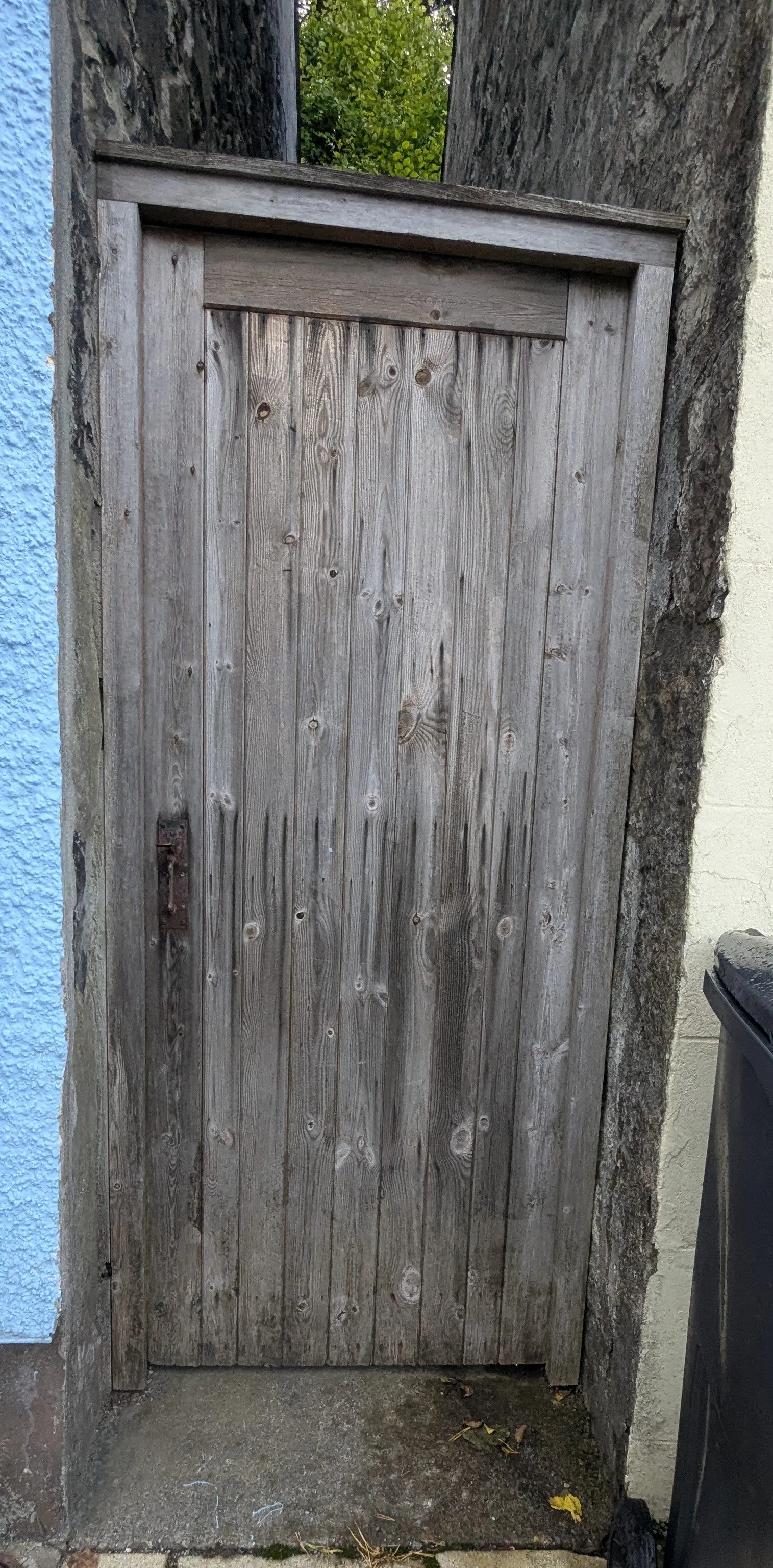
Tucked into a side street in Portree, this one opens onto an alley behind someone's garden.
Estate Gates & Gatehouses
Estate gates are different animals. Victorian and baronial estates used their gates almost like a preview. Turrets, whimsical details, sometimes a miniature echo of the main house waiting up the drive. "Here's a taste of what's coming," the gatehouse seems to say.
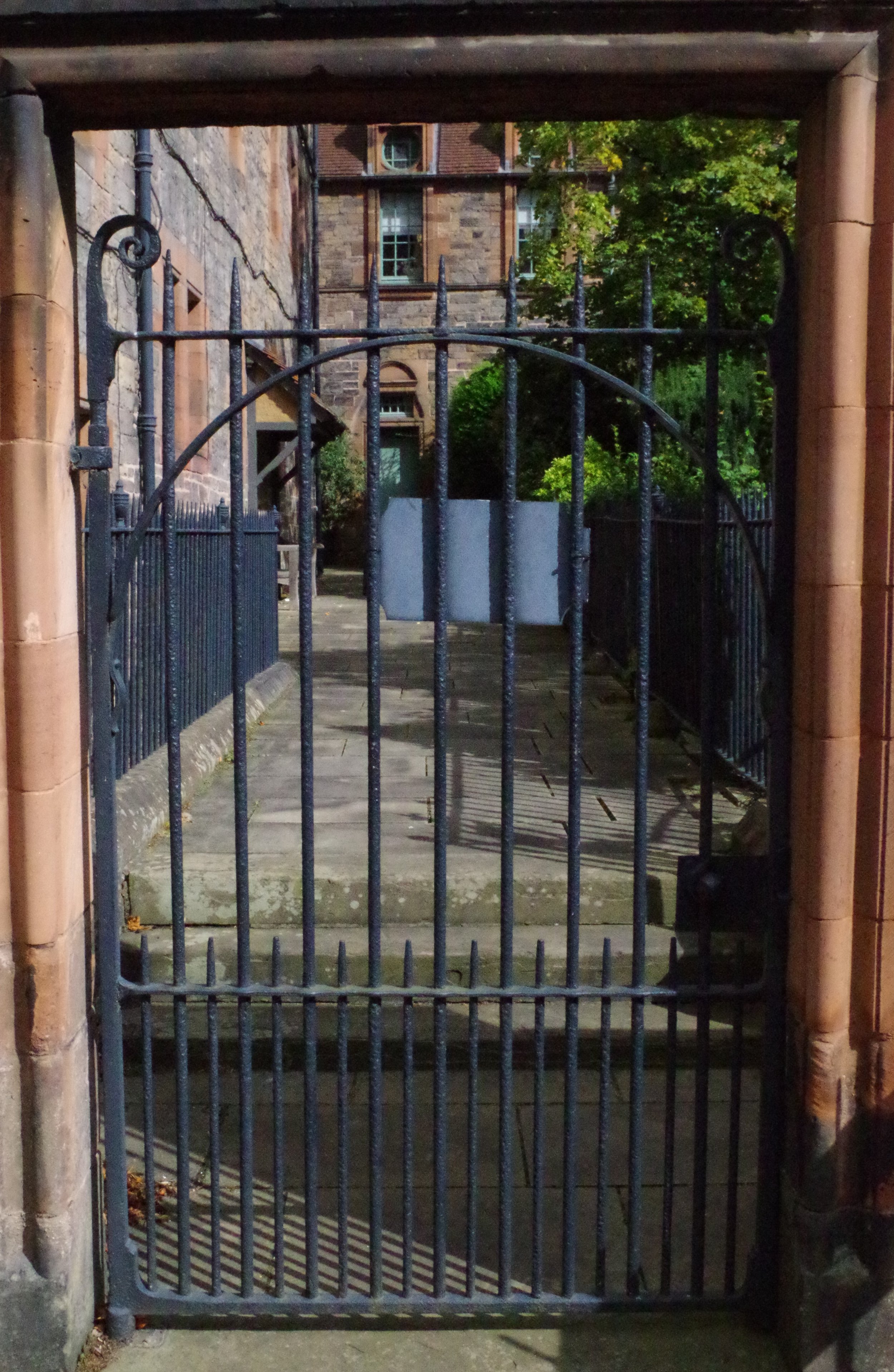
Dean Village, right by the entrance to the Leith Greenway. This gate leads into a private courtyard.
Gatehouses started as real security, controlling who came and went during unstable times. But as that need faded, the role shifted from defense to hospitality, greeting you before you even reached the front door.
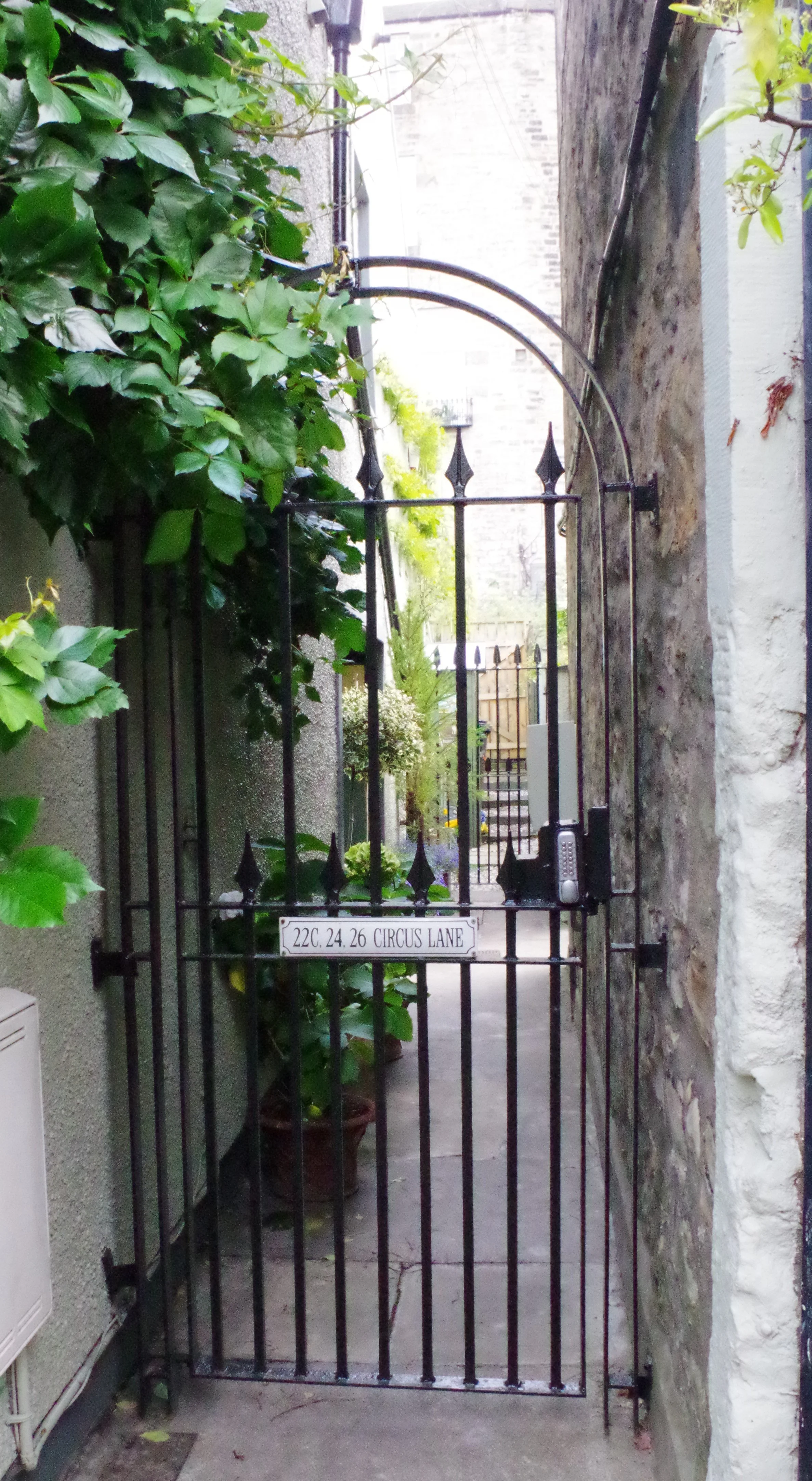
I couldn't resist sneaking a peek through this one into a courtyard on Circus Lane.
Then, I came across a completely different gate. Straight iron bars, pointed finials, a simple arched top, nothing fancy. Set into plain stone, it didn't try to draw the eye at all. It just held its ground. Which is, in its own way, a kind of confidence. Proportion and restraint, done well, are harder than it looks.
Every night in Portree, we walked past this gate on our way into town for dinner.
Garden & Walled Garden Gates
Garden gates are where the tone changes. Scotland's walled gardens have gates that feel almost mythic, like moon gates, tree-of-life motifs, stone arches wrapped in vines. Less barrier, more invitation.
Like doors, they carry symbolic weight, but a gate's symbolism lives more out in the open, tied to landscape with the experience of moving through a place rather than just entering a building. Palace and estate gates take that further. They're built to frame views, processions, and entire architectural narratives. A gate like that is a statement.
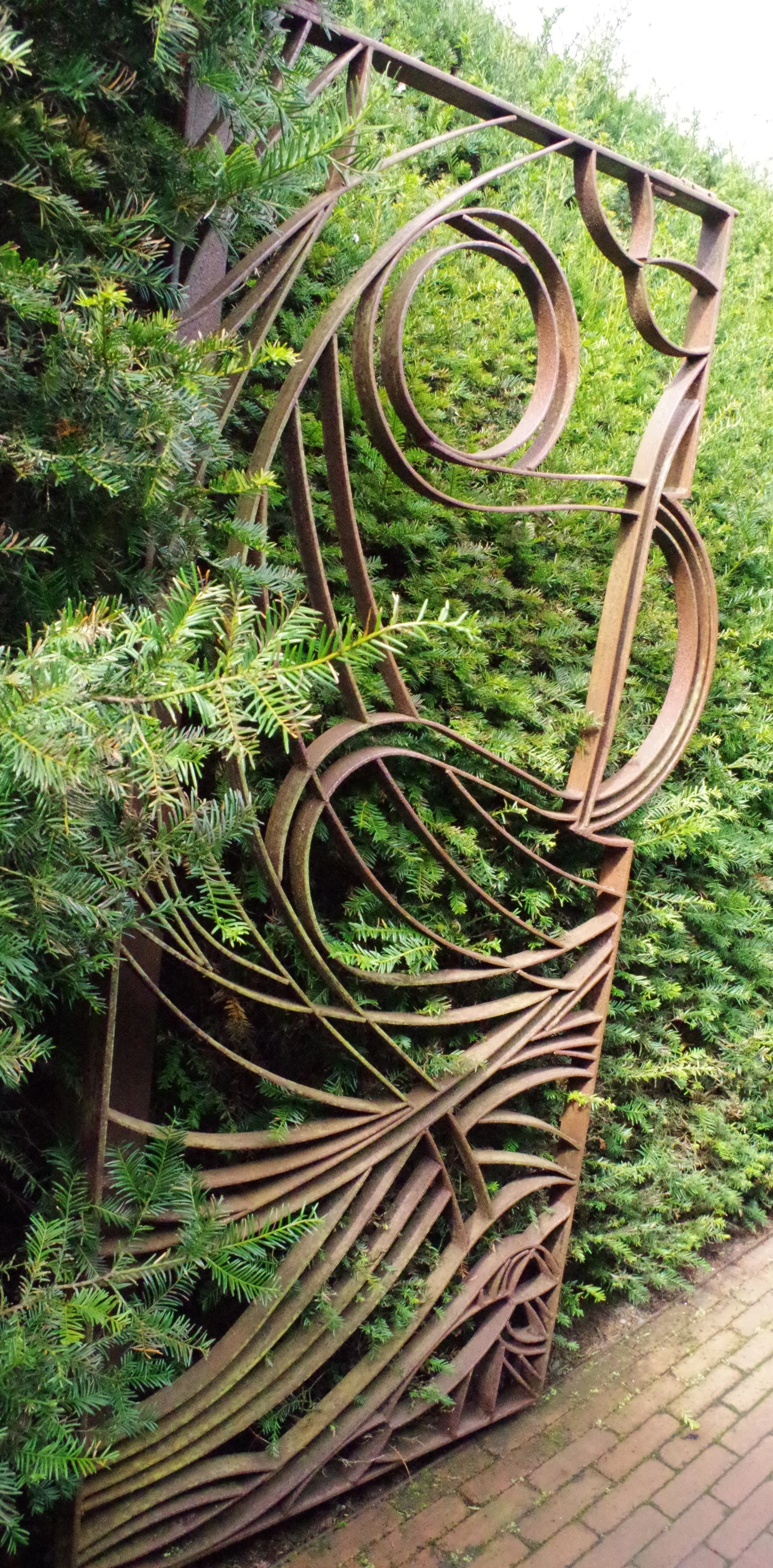
This one's at Jupiter Artland, an old family farm turned sculpture park on the way to Loch Ness. It opens into a maze that leads to the family's private pool.
The first garden gate I came across felt more like a sculpture than a barrier. Flowing wrought iron, curves twisting organically against the stone buildings behind it. You could stand in front of it for a while and not be entirely sure where the gate ended and the garden began. That’s the trick good ironwork pulls off.
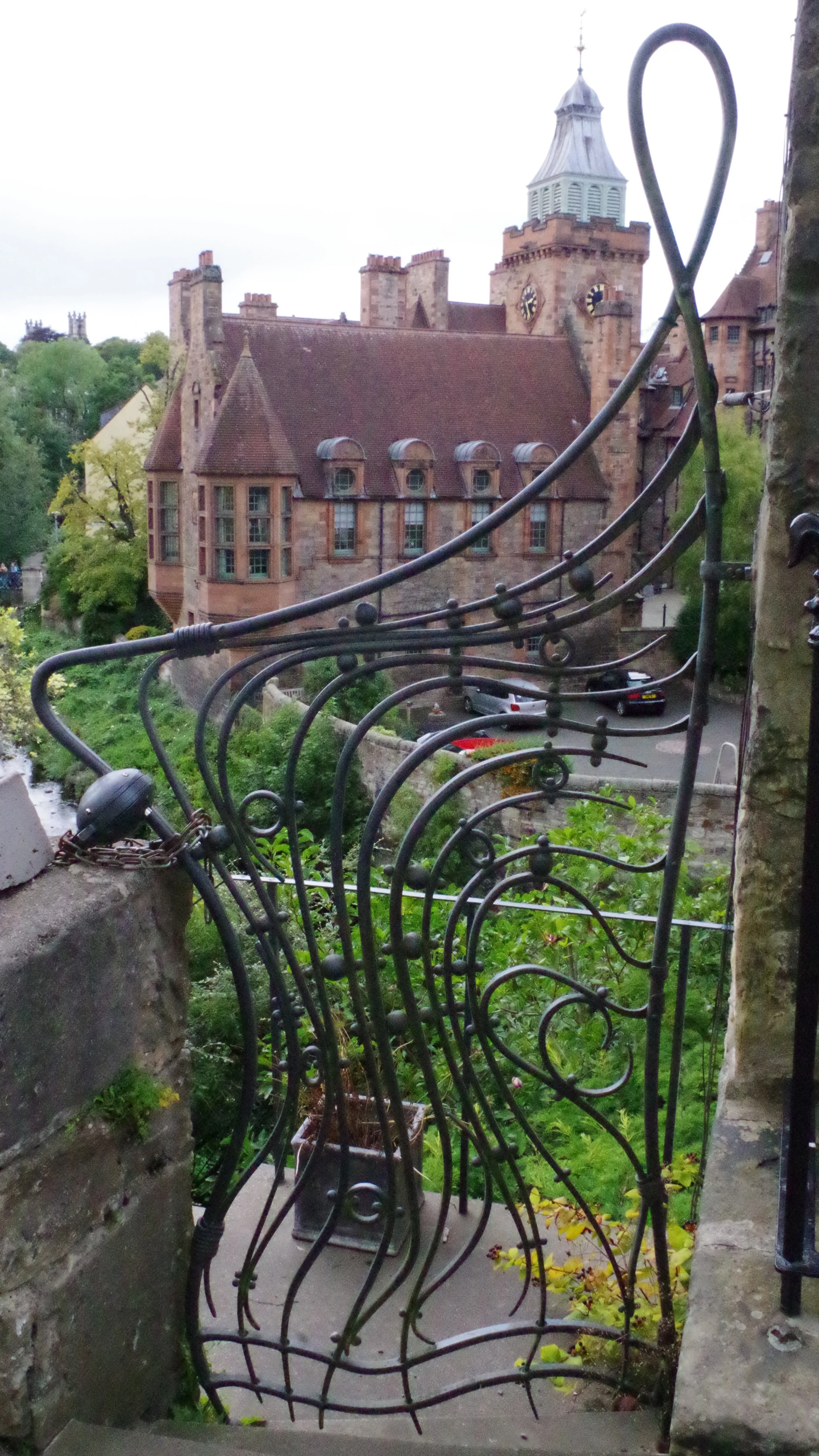
The Water of Leith runs below the greenery here, and this was one of the first gates I photographed on the walk down.
As architects, we tend to focus on the building itself, but the elements that shape approach and arrival matter just as much. Gates set the rhythm of a street. They frame views, create layers of privacy, and add to a sense of place, shaping how a space feels before you ever reach the front door.
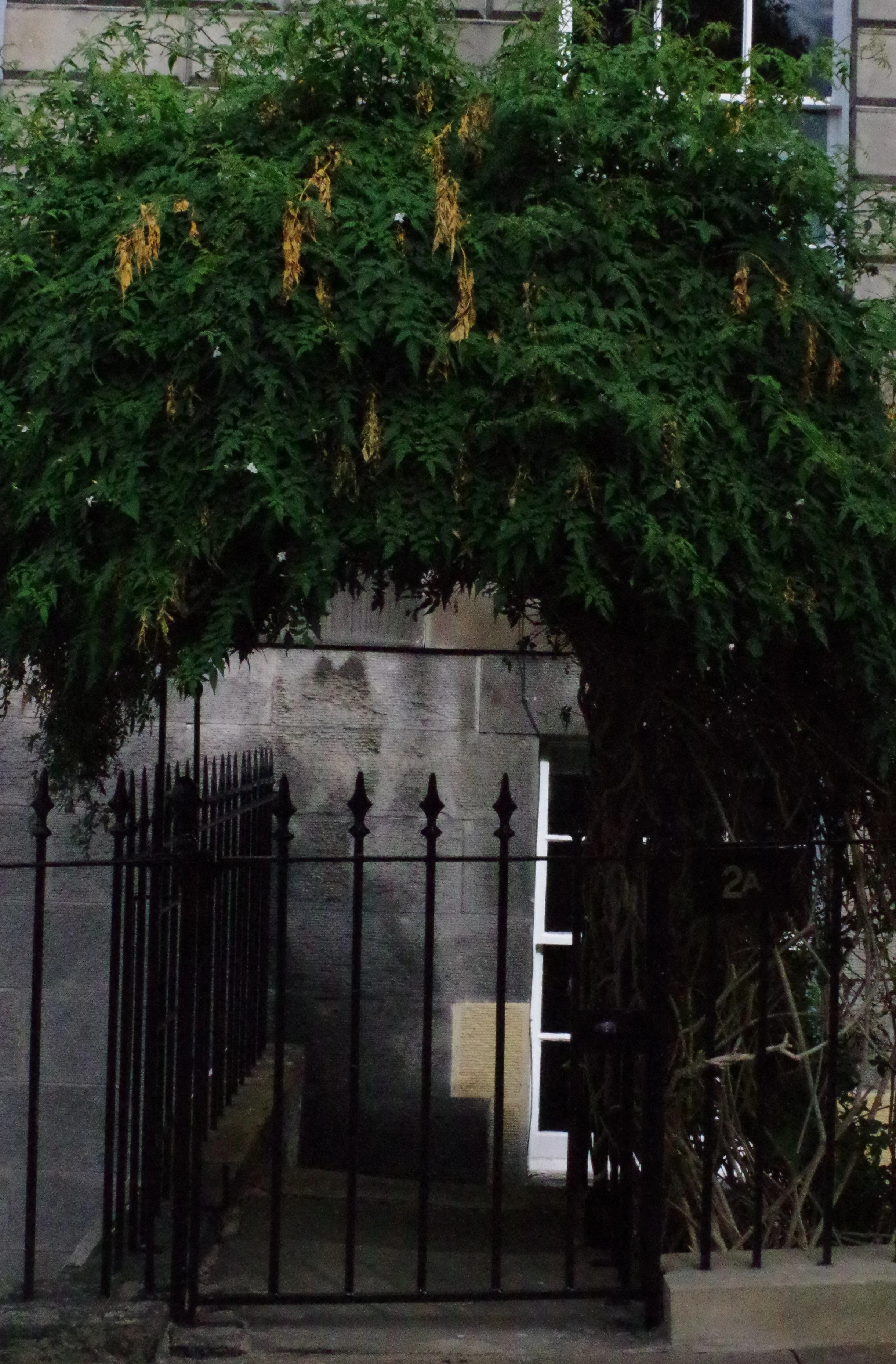
This gate looks like it provides access from the street to someone's private residence.
What struck me most was how much these gates reflected the same qualities I saw in the surrounding architecture. They were built to last and made with real care. Even weathered, they held onto their character. If anything, time seemed to add to their beauty rather than take away from it.