Architecture at the In-Between
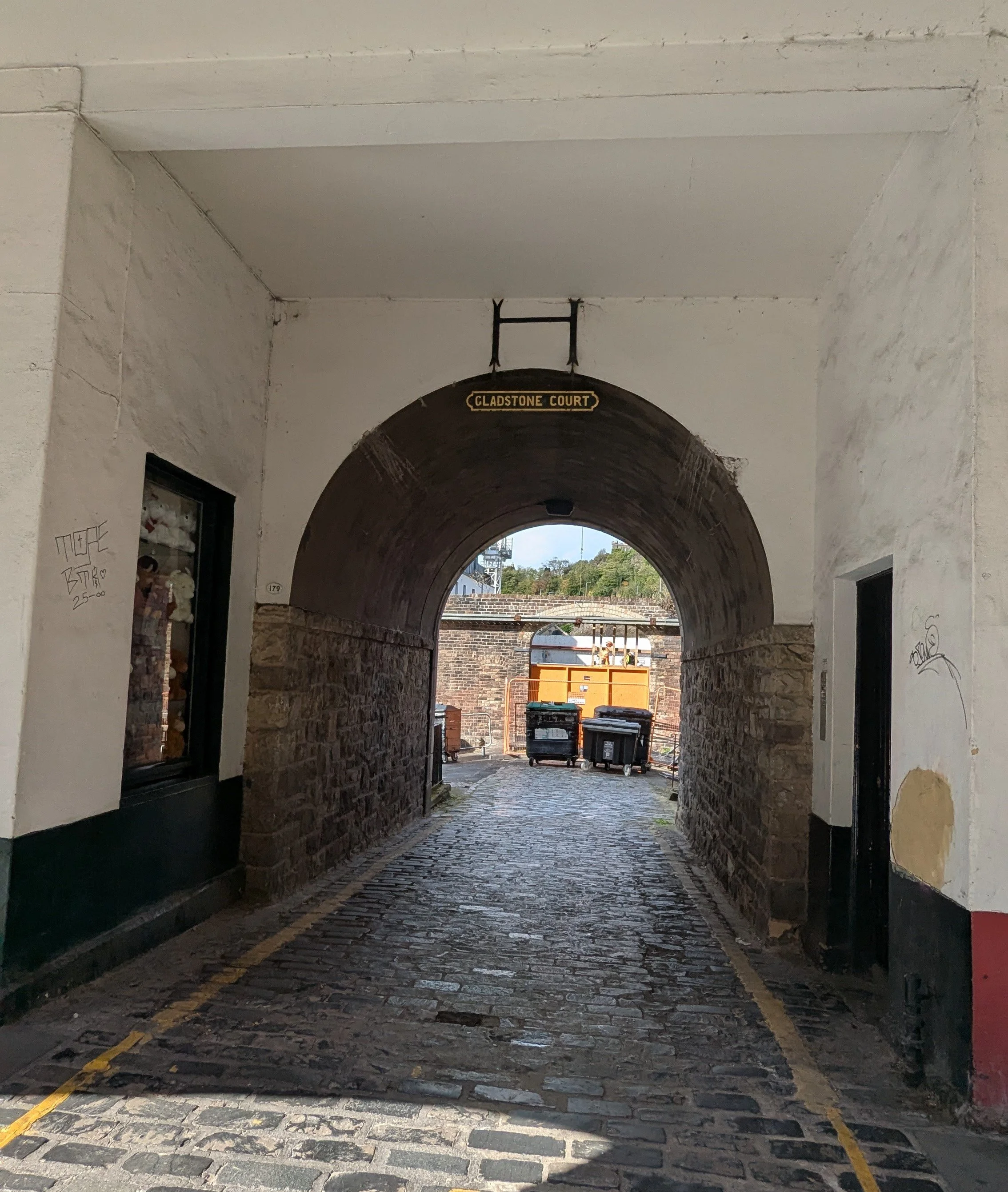
By studying alleyways and narrow lots, we explore how thoughtful design can reclaim overlooked areas and turn them into meaningful urban places.
Cities reveal their deepest character in the spaces we rarely design intentionally: the slivers between buildings, the residual edges of old property lines, the narrow lanes and stone passages shaped through centuries of occupation.
These “in-between spaces” may seem incidental, but they quietly determine how we move, orient, and experience the city. They recalibrate scale, compress section, and sharpen light against the surface. They are where material meets memory at close range.
The images captured during recent site observations in Scotland highlight these spatial conditions — each one demonstrating how architecture negotiates constraint, culture, and memory.
“Architecture at the in-between” explores how overlooked conditions — thresholds, passageways, alleys — structure urban experience at the most intimate scale. These spaces quietly, persistently define our cities.
Urban Corridors as Frames of Landscape
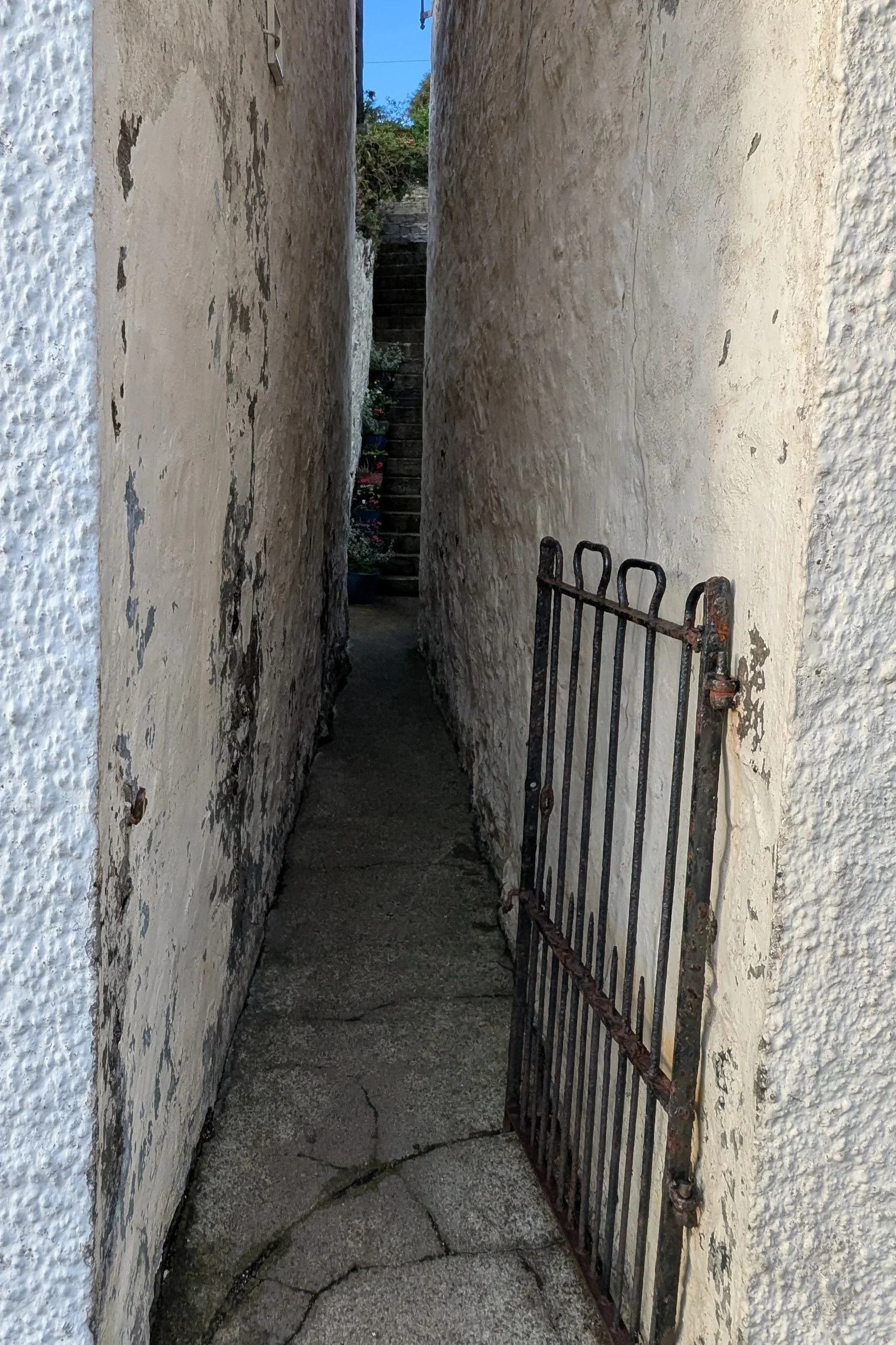
A narrow urban corridor draws the eye toward a dramatic landscape beyond — an accidental but powerful framed vista.
Here, the corridor becomes a calibrated viewfinder with mass and void working together to construct a deliberate frame. The in-between aligns the body to the landscape through proportion and contrast.
Passageways That Reveal the Life
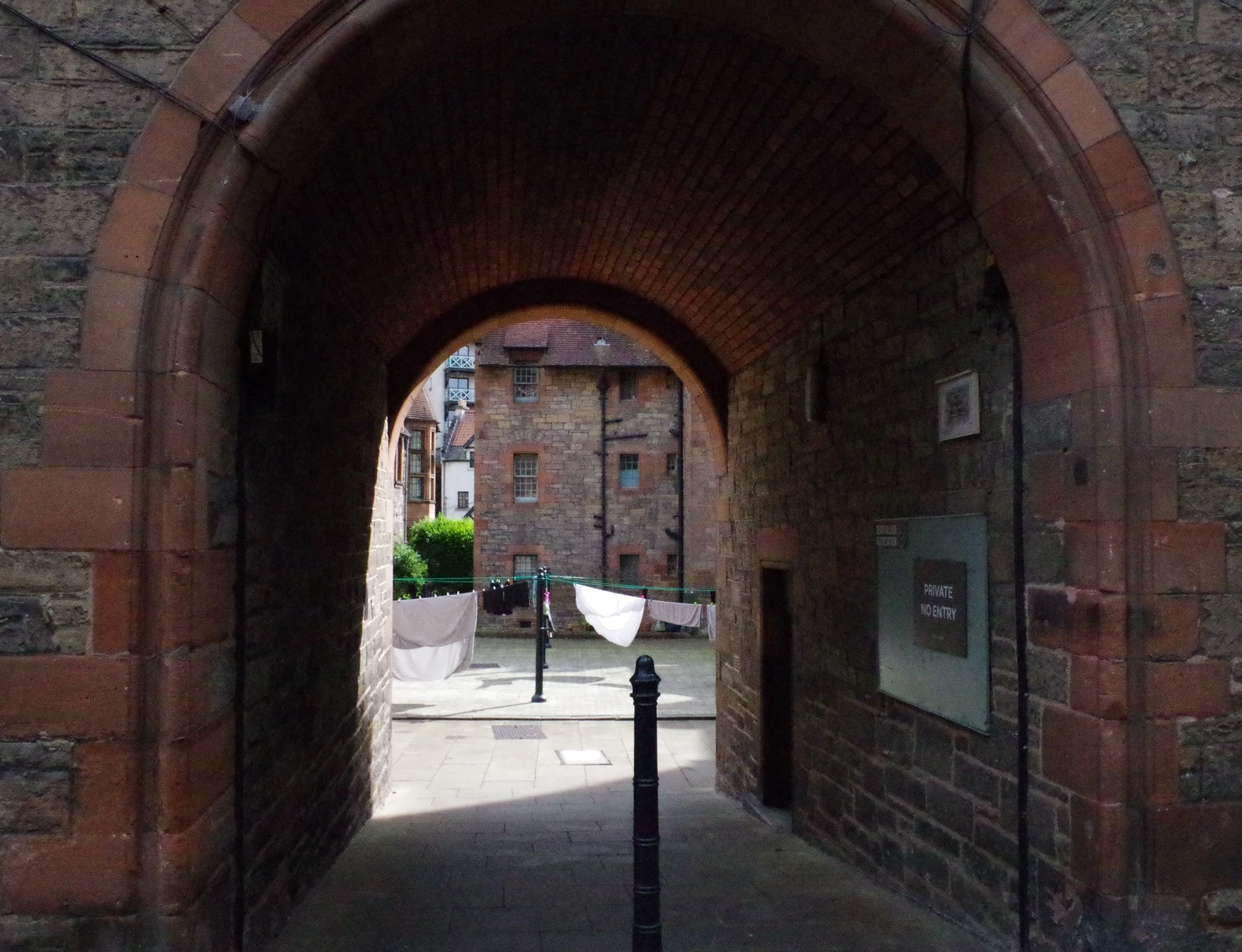
A section opens to a lived-in courtyard, where history and everyday ritual coexist.
This arched stone passage unfolds into a private courtyard, where laundry hangs. The juxtaposition underscores what makes historic environments compelling. They are not preserved as static artifacts; they adapt and renew as the city ebbs and flows.
Everyday Passage, Extraordinary Compression
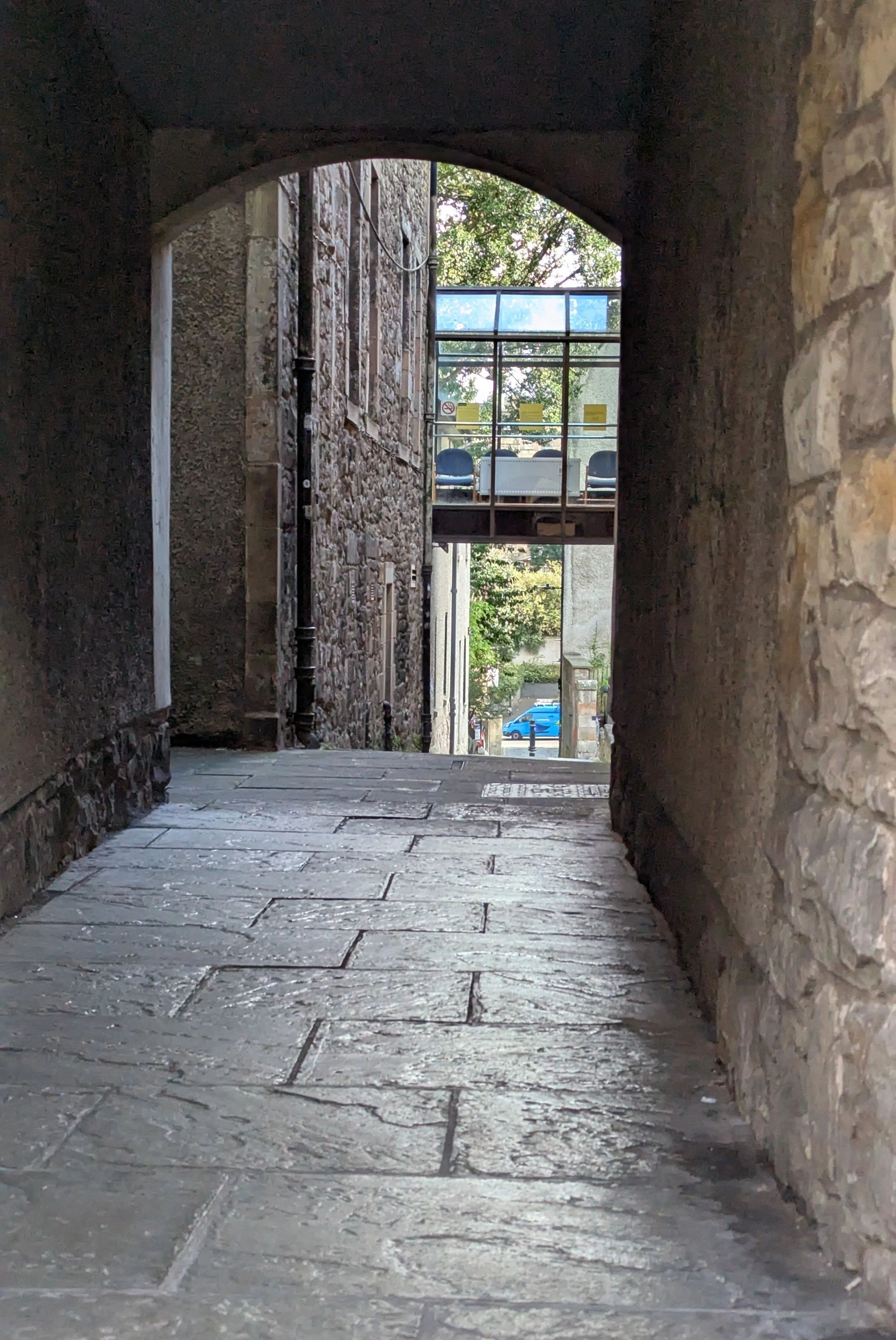
Where light, shadow, and movement create an intimate spatial drama in a compressed mid-block alleyway.
Here, the tighter proportions invite a slower pace, encouraging users to notice textures and subtle transitions. The proportions slow the body, narrowing peripheral vision and subtly altering the way sound reverberates.
Gullan’s Close: A Portal Through Time
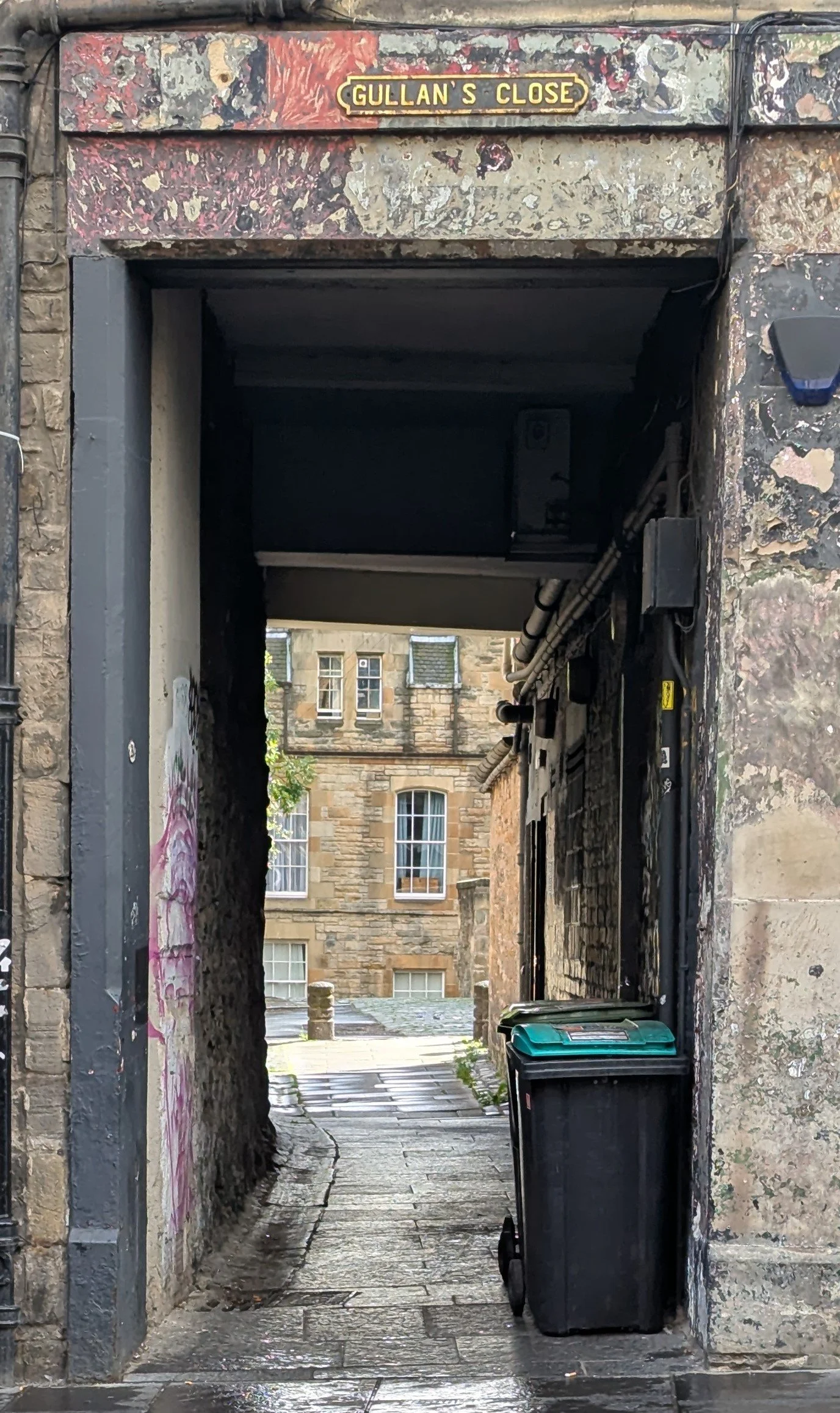
A named close marking centuries of micro-urban circulation patterns.
Historic “closes” reveal a naming tradition tied to residents, trades, or geographic markers. They embody the social and economic microhistory of districts — offering architects insight into how circulation was shaped by daily life rather than by formal planning. Their scale reflects trade patterns and incremental subdivision.
Stone Passages and Sequential Thresholds
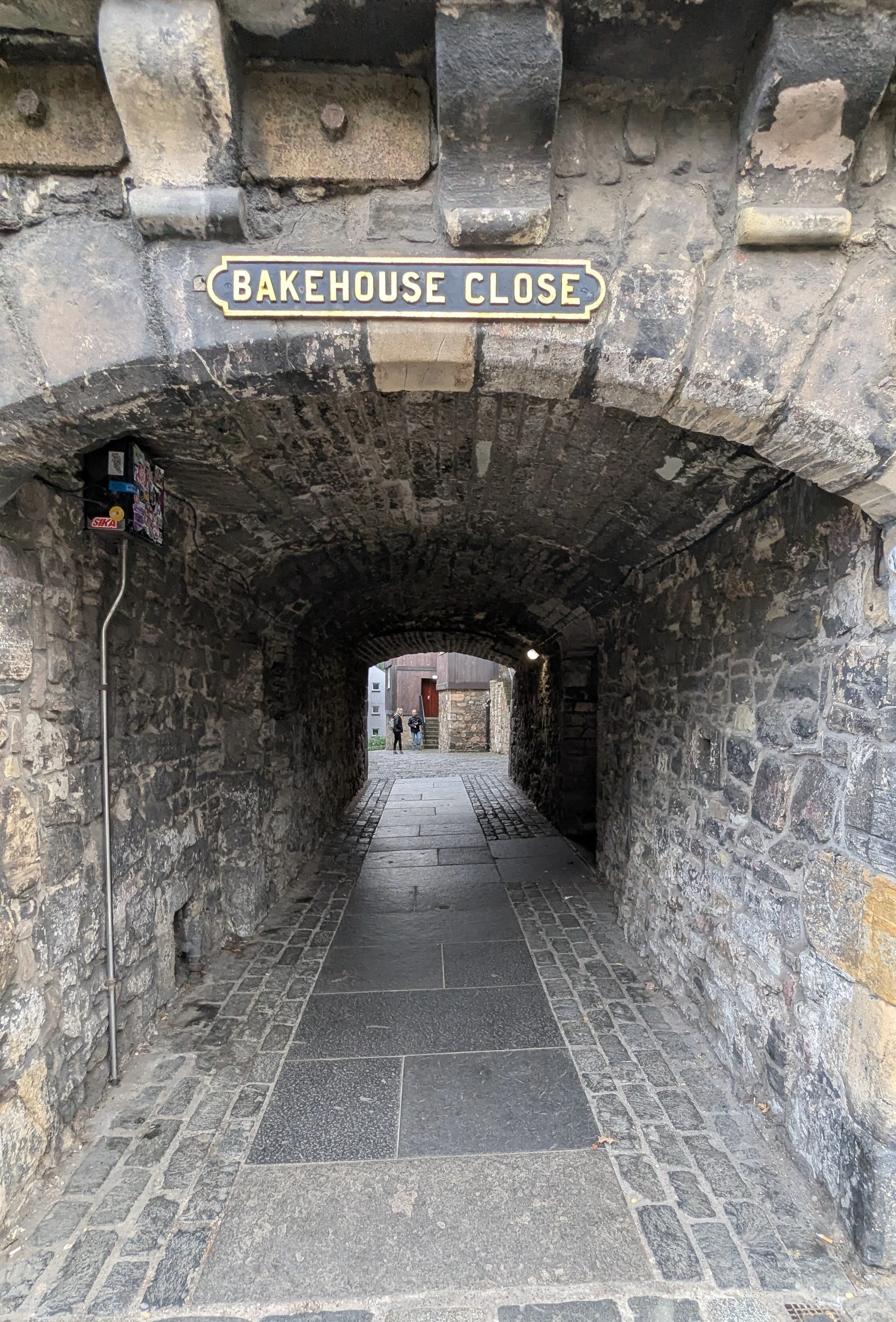
A medieval stone corridor leading from enclosure to openness.
Simple geometry can create powerful experiential transitions. The arched opening at the end is a classic medieval technique for controlling sightlines and protecting courtyards. This is spatial sequencing in its most elemental form: approach → compression → reveal.
Nighttime Descent Through a Historic Close

Evening descent through a steep stone close reveals the city’s vertical drama and layered silhouette.
A great example of how lighting can transform narrow passages after dark. Warm fixtures graze stone texture; cool sky recedes into silhouette. Steps intensify vertical compression, turning descent into procession — a reminder that in-between spaces can be as atmospheric as any public square.
Subtle Urban Rooms Formed by Narrow Transitions

Light at the end of a stone corridor creates a soft “urban room.”
The stone surfaces amplify reflected light, creating a gentle transition from shadow to openness. The worn paving stones reveal generational use. What began as passage becomes room — an expansion in plan barely perceptible, yet spatially significant. In-between spaces are rarely static.
Baron Maule’s Close: Naming as Spatial Identity
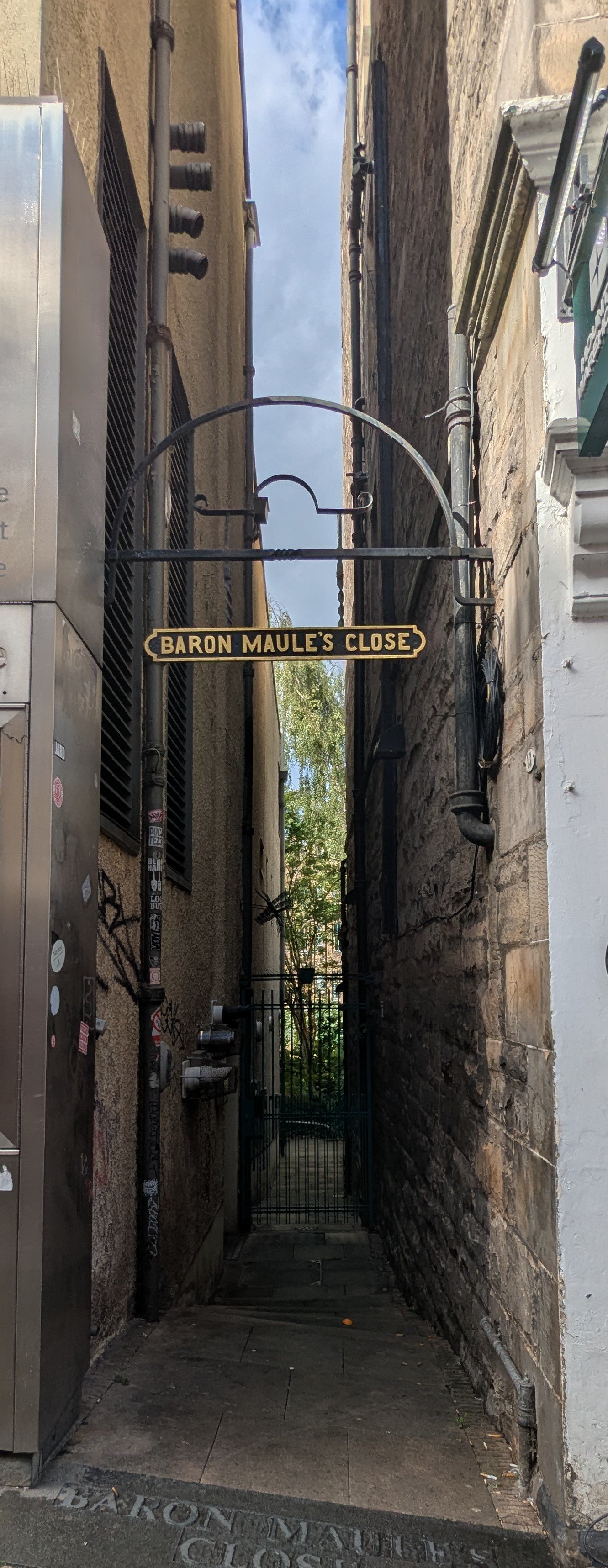
A gated close marking the boundary between public movement and semi-private territory.
Ironwork, signage, and paving shifts create a layered boundary condition. Architecture communicates through small signals, like texture and hinge line. Identity is often resolved at the scale of detail. As architects, engaging with these conditions strengthens our ability to design at every scale.
Thresholds That Shape Behavior
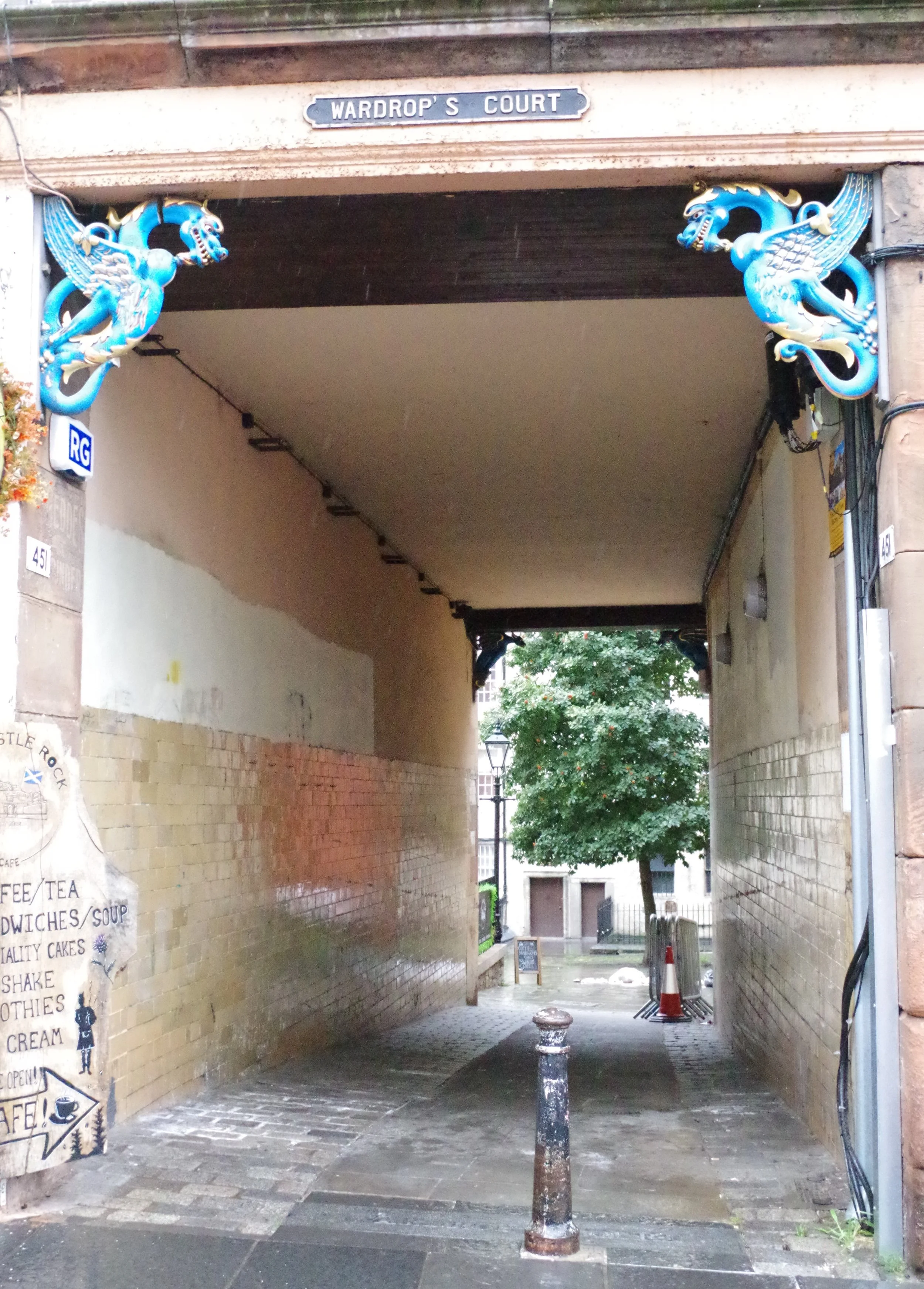
A compressed area that reveals light at the far end, encouraging passage.
In-between spaces serve as transitions between states — between private and public. The subtle transitions heighten awareness, inviting people to feel the city rather than simply pass through it. At this scale, design becomes behavioral — spatial cues come before instruction, and the body responds to proportion instinctively.
The In-Between as Cultural Memory
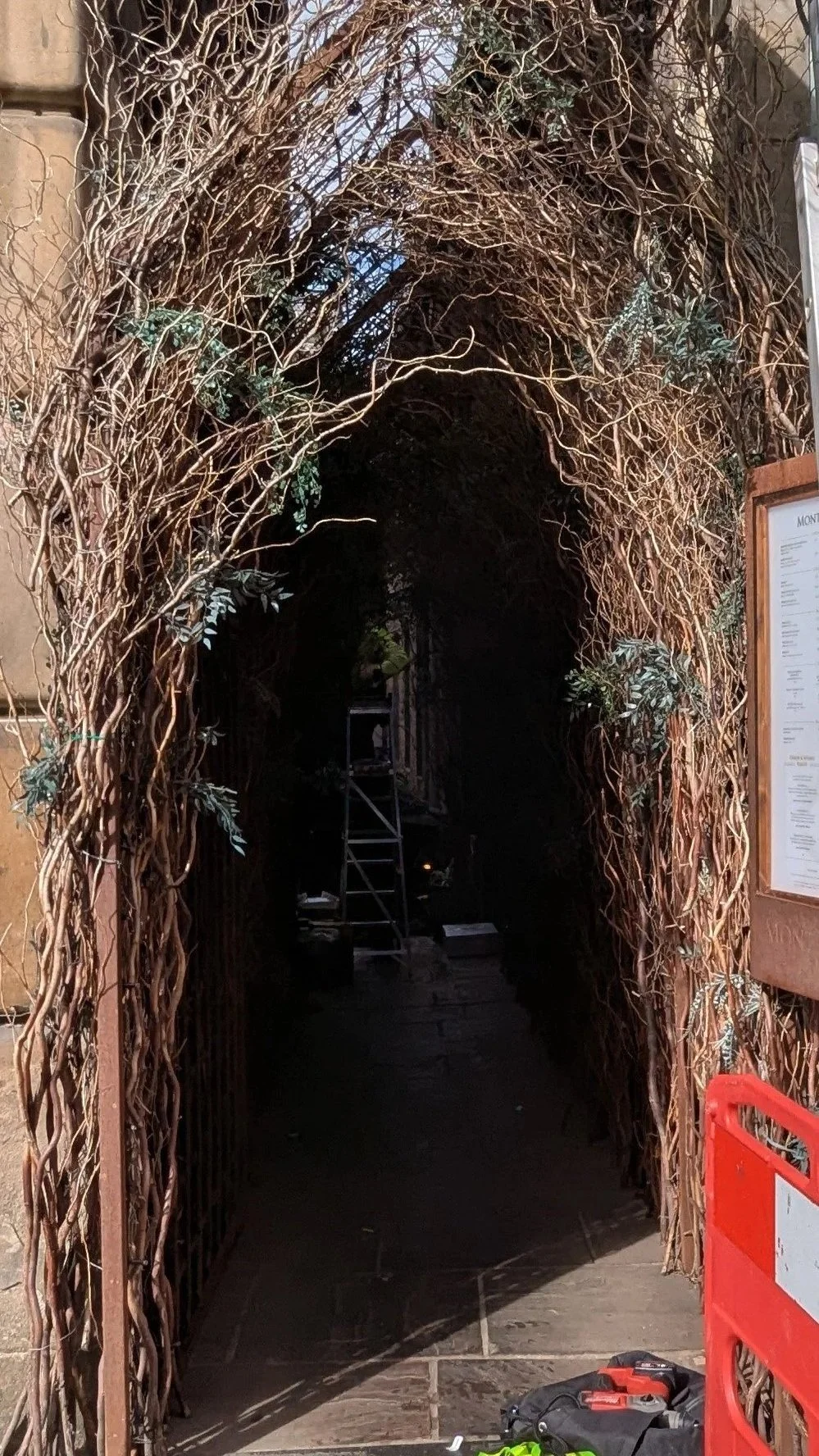
This residual corridor that still frames traces of past urban patterns.
Every alley carries a story. Many began as residual space — the byproduct of subdivision, infrastructure, and incremental growth. Yet these conditions preserve the most legible traces of urban evolution. Irregular alignments, misaligned cornices, shifting material palettes — these intimate spaces record the evolution of the city more clearly than any boulevard.
Paisley Close: Threshold as Narrative
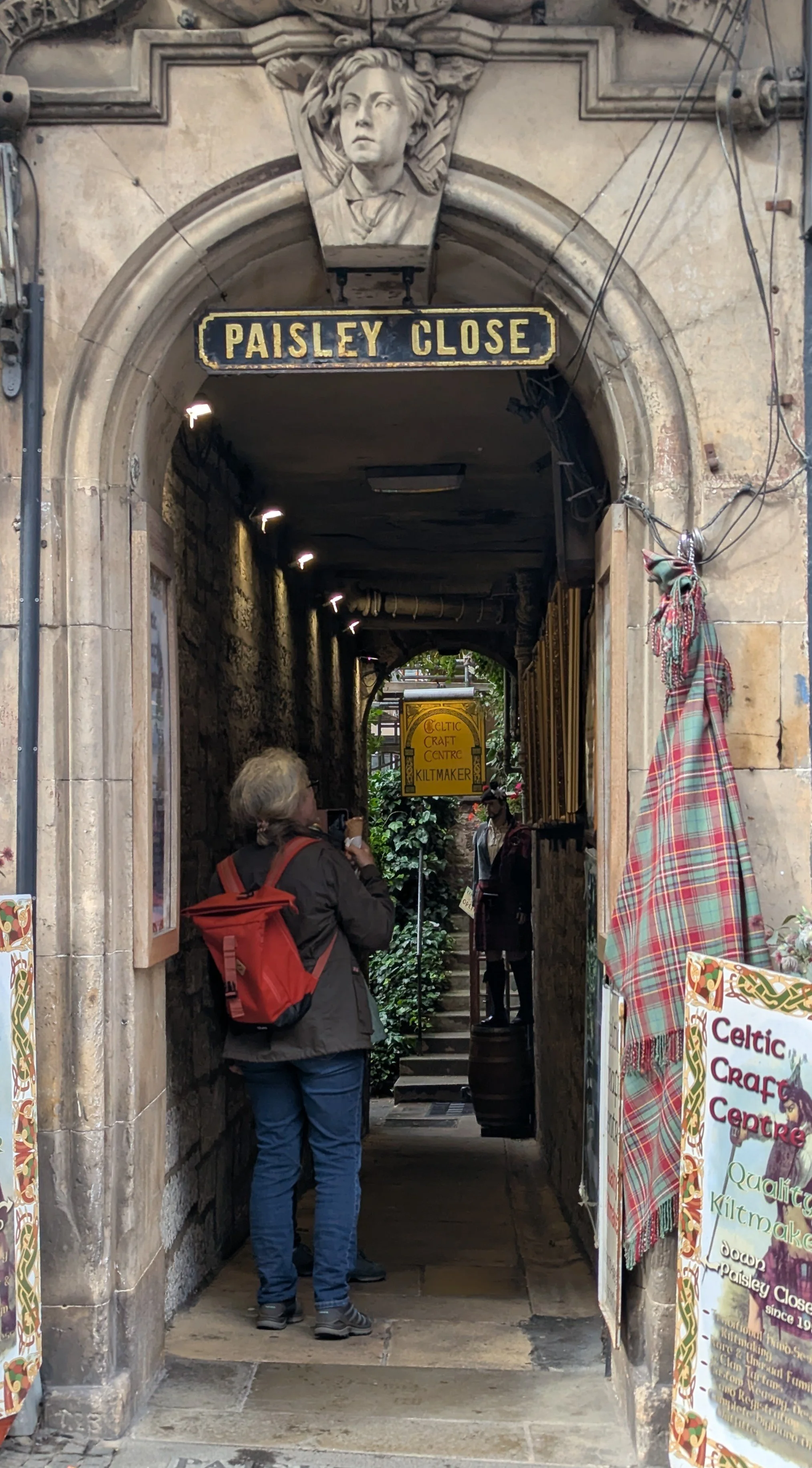
A carved stone arch frames a narrow close, where signage and shadow announce a layered interior world beyond the street.
A modest hanging sign transforms the passage into destination, compressing entry into a moment of recognition. The carved head above the arch lends civic gravitas, elevating what might otherwise be overlooked. Light fixtures punctuate the narrow corridor, pulling the eye inward toward greenery and craft beyond. The close operates as both conduit and invitation — a spatial hinge between commerce and courtyard.
Wrought Iron Threshold: Compression and Release
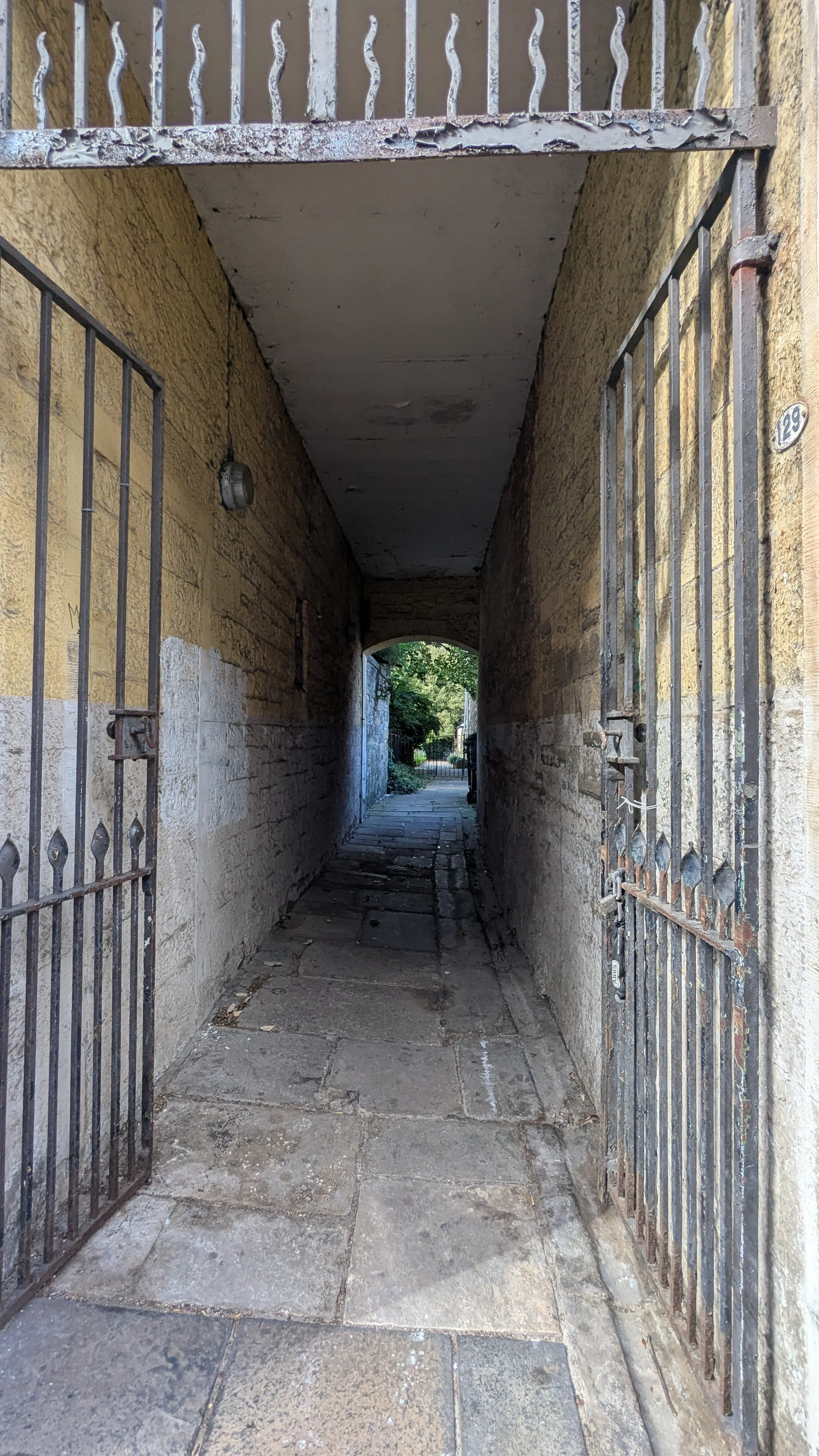
Open wrought-iron gates frame a narrow stone passage.
The gates do not close the space; they articulate it. Passage becomes procession. A few meters of stone and iron choreograph a complete spatial narrative: entry, confinement, anticipation, emergence.
***
Walking these compressed Scottish closes made me reflect on my own shipping container work during my thesis studies in Charleston — how constraint and layered transitions can transform even the most utilitarian structures into spatial experiences.
Slot Lots as Micro-Urban Rooms
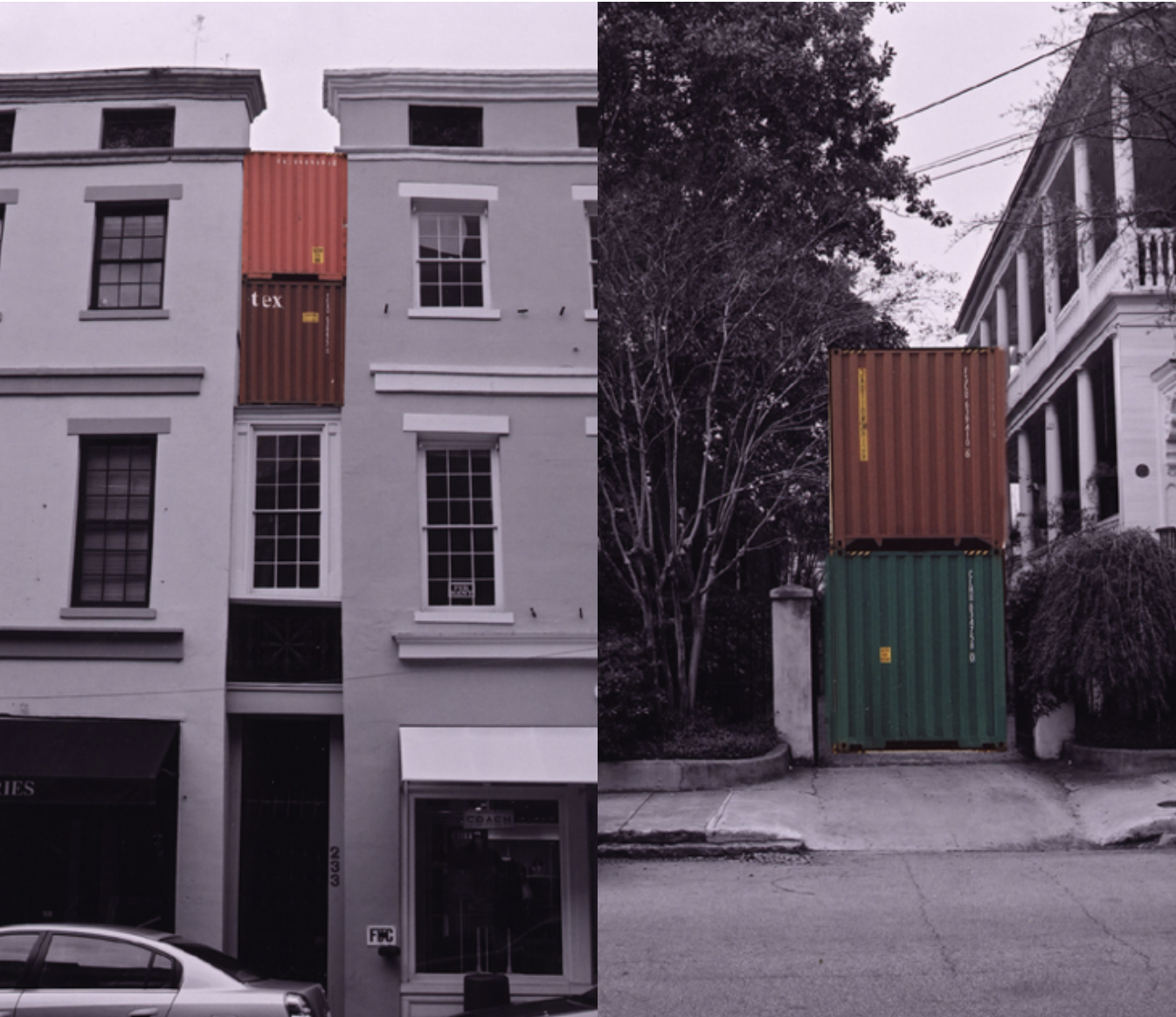
Shipping container architecture balances industrial origins with adaptive design thinking.
Ultra-narrow parcels that challenge conventional footprints, known as slot building lots, reveal how architectural ingenuity emerges from constraint. This constraint does not limit architecture — it sharpens it. These spaces force us to rethink proportion, circulation, and light and carve out unexpected verticality.
Reclaiming the In-Between
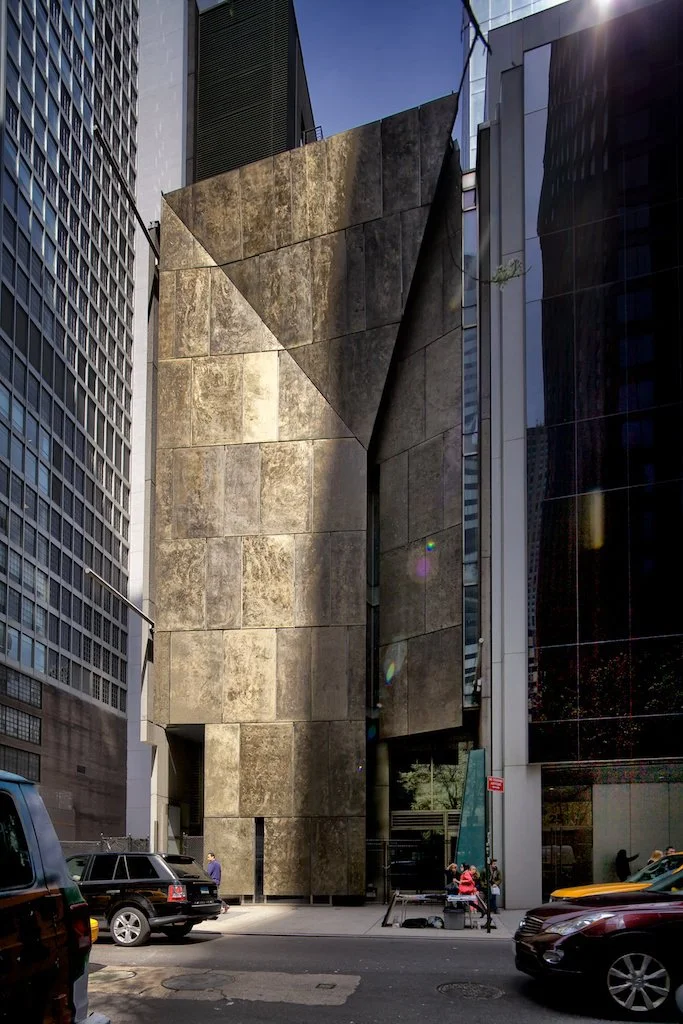
The American Folk Art Museum uses cast white bronze alloy panels to create a unique exhibition space that’s sandwiched between two larger buildings.
Our firm believes good architecture should elevate every part of the city, not just the parts that get the most attention. By studying alleyways and slot lots, we are exploring how intentional design can reclaim forgotten areas and transform them into meaningful urban experiences.
Whether these become pedestrian shortcuts, pocket gardens, micro-retail fronts, light courts, even communal niches, the ambition is to tune them. To calibrate light, surface, and sequence. To allow even the narrowest seam to carry architectural intention.